Affiliate notice

Affiliate links may be included in posts for which compensation may be received.
Showing posts with label outdoors. Show all posts

Thursday, January 9, 2025

New Hampshire Winter Trout Stocking

brook trout
Brook Trout | Credit: NPS
Trout are popular with ice fishing anglers in New Hampshire. Each fall, the New Hampshire Fish and Game Department (NHFG) stocks trout in streams, rivers, lakes, and ponds to enhance the Granite state's winter ice fishery.

Winter anglers interested in catching trout in New Hampshire can find regulations and places to fish on the NHFG website.

New Hampshire lakes and ponds that were stocked with trout during the fall of 2024 and are open to ice fishing include:

Akers Pond in Errol, Beaver Pond in Woodstock, Bow Lake in Strafford, Cedar Pond in Milan, Big Diamond Pond in Stewartstown (opened January 1, 2025), Higher Ground Pond in Wentworth, Highland Lake in Andover, Hildreth Pond in Warren, Little Dan Hole Pond in Ossipee, Manning Lake in Gilmanton, Martin Meadow Pond in Lancaster, Mascoma Lake in Enfield, Mirror Lake in Woodstock, Newfound Lake in Bristol, Oguntz Lake in Lyman, Pearl Lake in Lisbon, Perch Pond in Lisbon, Pleasant Lake in Deerfield, Streeter Pond in Sugar Hill, Sunapee Lake in Newbury, Tewksbury Pond in Grafton, Webster Lake in Franklin, White Lake in Tamworth, and Winnisquam Lake in Laconia.

In addition to those locations, numerous other New Hampshire waterbodies are open for year-round fishing.

“The New Hampshire Fish and Game Department’s hatcheries stock post-spawn brook and brown trout into selected waterbodies that do not have a closed season before winter,” said Fish and Game’s Inland Fisheries Program Supervisor John Magee. “These fish can range from 2 to 3 pounds each. Numbers, dates, and stocking locations vary annually. I would encourage anglers of all skill levels to take advantage of this season’s stocked opportunities throughout New Hampshire when weather conditions are favorable and once the ice is safe.”

Productive locations to fish include in some of the tailwater fisheries such as the Newfound River, according to Magee. “When water levels are drawn down on larger lakes for the fall, prize-sized fish often drop down below dams, creating opportunities for savvy winter anglers.

New Hampshire free fishing day is January 18.

For more information about ice fishing in New Hampshire, visit www.wildlife.nh.gov.

source: New Hampshire Fish and Game Department


Saturday, October 2, 2021

Leaf Peeping Tips

fall foliage - maple leaves
Autumn is prime time for leaf peeping in New England. This article offers a variety of tips for planning a trip to view fall foliage and other natural beauty in New England.

To experience beautiful views of fall foliage in the New England region, travelers should plan ahead whenever possible. Leaf peeping can be done on day trips, overnight excursions, or multi-day vacations.

New England states provide travelers with extensive resources for trip planning. Most states provide fall foliage forecasts, weekly updates, and route information.

Other sources of leaf peeping information can be include local contacts such as county tourism officials, innkeepers, restaurant staff, and members of the travel industry.

Although many travelers prefer to enjoy fall foliage from their own vehicle, an array of options exist. Leaf peeping can be enjoyed by train, bus, or other modes of transportation. More intimate views can sometimes be found by hiking. 

Choosing items to take on a trip will depend on the length, transportation mode, and other factors. For most travelers, water is an essential item. Other useful accessories might include snacks, eyewear, proper clothing, and a digital camera.

For independent travelers, navigation is an important subject to consider. Although smartphones and other electronic devices are convenient, it's usually good to have paper maps and possibly a compass.

Weather can be another factor to consider. Fall is usually a time when there are plenty of bright clear days which are suitable for leaf peeping and nature appreciation. Between periods of fair weather, storms or other natural events can limit travel opportunities.

The fall season in New England can be a great time to enjoy the outdoors. Travelers can make the most of their time by doing pre-trip research, being ready on short notice, and taking opportunities when they arise. 


Tuesday, December 8, 2020

First Day Hikes in New England 2021

A mix of virtual and group First Day Hikes will be held in New England to celebrate New Year's Day 2021. This article includes a selection of First Day hikes, walks, virtual tours, hiking areas, and other resources in New England.

First Day hikes are popular with individuals and families as a way to welcome the new year while enjoying the outdoors and connecting with nature.

In 2020,  nearly 85,000 people celebrated the New Year outdoors, collectively hiking over 176,366 miles throughout the country on the guided hikes. Other participants hiked state park trails throughout the day.

In normal circumstances, America’s State Parks host a full range of First Day Hike events. According to America’s State Parks (www.stateparks.org), states will be adapting their 2021 First Day hikes to keep people safe and healthy during the COVID-19 Coronavirus Pandemic.

Changes will include hikes with smaller groups, virtual hikes, self-guided hikes and trail challenges. States will be adding events and trails throughout the month of December. Hike distances and difficulty levels may vary from park to park.


New England First Day Hike Events:

Maine

Virtual Adventures - Maine Bureau of Parks and Lands

New Hampshire

Virtual First Day Hike Event - New Hampshire State Parks

Connecticut

Virtual and Self-Guided Hikes in Connecticut - Connecticut Department of Energy and Environmental Protection (DEEP)


Hiking Areas in New England

While many First Day hikes are affected by the pandemic, the region has plenty of public lands and other areas where individuals and families can enjoy hiking, walking, and other outdoor recreation. The following are a few locations where hiking and exploring are possible.

The Green Mountain National Forest in western Vermont is one of New England's most popular hiking destinations. A public, federally managed national forest, Green Mountain is home to miles of trails and other areas for outdoor recreation. For information about health and safety precautions for Vermont, visit https://www.healthvermont.gov/response/coronavirus-covid-19

In Northwest Massachusetts, the Mohawk Trail Woodlands encompasses 361,941 acres of northern forests, wetlands, unique geology, and a biologically diverse ecosystem.

Along the coast of Massachusetts, Cape Cod National Seashore includes miles of sandy beaches, lighthouses, marshes, ponds, cranberry bogs, and upland landscapes. Twelve walking trails at the Cape Cod seashore are open year round. Cape Cod National Seashore is located approximately 20 miles east of Hyannis, MA.

In Rhode Island, state parks and saltwater beaches are open with limitations in place. The number of parking spots will be reduced, and parking gates may need to be closed at times depending on beach capacity. For more information, visit: https://riparks.com/covid19.php


2021 First Day Hikes Resources

The full listing of First Day Hikes and other special programs in America’s State Parks is available at:

https://www.stateparks.org/special-programs/first-day-hikes/

America's State Parks - First Day Hikes

American Hiking Society - First Day Hikes


Related Information

First Day Hikes in New England 2020

Christmas in New England


Sunday, August 16, 2020

Rachel Carson National Wildlife Refuge 50th Anniversary


bald eagle in flight
In 2020, Rachel Carson National Wildlife Refuge (NWR) is celebrating the 50th anniversary of its renaming in honor of the world-renowned marine biologist, author, environmentalist and former U.S. Fish and Wildlife Service employee, Rachel Carson.

The refuge's year-long celebration marks the formal dedication of the renaming, which took place on June 27, 1970. The 50th anniversary celebration will include an array of virtual and remote events.

During the 50th anniversary celebration, the refuge will be highlighting dozens of opportunities to explore its wealth of wildlife, habitat and natural resources, as well as Rachel Carson’s legacy.

Rachel Carson National Wildlife Refuge, established in 1966 as the Coastal Maine National Wildlife Refuge, is comprised of 11 divisions, which span 50 miles of coastline in York and Cumberland counties, from Kittery to Cape Elizabeth.

Currently at 5,690 acres, the refuge will contain approximately 14,683 acres of various wildlife habitats when land acquisition is complete.

In addition to sheltering wildlife and protecting natural resources, Rachel Carson NWR offers a variety of experiences on public lands.

The refuge contains three main nature trails and many wildlife observation stations featuring every habitat type found on the refuge, hunting and fishing opportunities, interpretive and educational programs, a visitor information center, volunteering opportunities, and other recreational activities.

Anglers can access a variety of tidal fishing spots on the refuge. The fishing season is open year round for saltwater fishing to the head of tide.

Chauncey Creek, Brave Boat Tidal Creek, Ogunquit River, Stevens Brook, Webhannet River, Merriland River/Skinner Mill, Mousam River, Goosefare Brook, and Spurwink River were incorporated into the previous Refuge Fish Plan in 2000.

The 2020 Recreational Fishing Plan expands fishing opportunities available to the public by opening the Little River at Timber Point.

Rachel Carson was a world-renowned marine biologist, author and environmentalist who served as an aquatic biologist and editor-in-chief for the U.S. Fish & Wildlife Service. She has been credited with launching the contemporary environmental movement and awakening the concern of Americans for the environment.

In her writings, Rachel Carson displayed a unique ability to simultaneously engage her own sense of wonder as well as that of her readers through eloquent prose and investigation of natural phenomena and biological processes. Her work helped connect people to nature and inspire environmental stewardship.

Carson regularly summered on Southport Island, where she studied its beach and tide pools to research The Edge of the Sea (1955). Through tireless investigation for her greatest work, Silent Spring (1962), she linked the unrestrained use of post-World War II chemical pesticides with fearsome, biological consequences.

Overcoming industry and government pressure to abandon her research, Carson alerted generations to use chemicals with utmost caution, warning that their improper use would have devastating effects on public health and the environment.

As fitting recognition of Carson’s contributions to conservation after her death in 1964, the refuge was renamed in her honor.

source: USFWS

Tuesday, December 31, 2019

New Hampshire Rabbit Reports

Eastern Cottontail
NH Rabbit Reports (nhrabbitreports.org) is asking for citizen scientists to collect data, take photos, and report sightings of rabbits throughout New Hampshire this winter.

Anyone can participate, and rabbit sightings will help the NH Rabbit Reports team learn more about where rabbit species are located in the state.

Participants can use a smartphone or computer to submit a sighting information and photograph to NH Rabbit Reports, and no species identification skills are required.

New Hampshire is home to two species of rabbits, the Eastern cottontail and the New England cottontail, as well as one species of hare, the snowshoe hare.

NH Rabbit Reports sighting information helps researchers understand the distribution and potential abundance of these species. By understanding the relationship between the distributions of the two rabbit species, organizations and state agencies can make informed decisions about habitat management.

This is vital for rabbit species, particularly for the New England cottontail, which is classified as a state-endangered species in New Hampshire.

The New England cottontail is native to New Hampshire, but has seen dwindling population numbers over the last several decades throughout its range, mostly due to habitat loss and fragmentation. The species requires large areas of early-successional habitat to avoid predators, and they typically don’t venture far from thick shrubs and young trees.

Meanwhile, eastern cottontails are able to venture farther from protective cover and are better equipped to survive in the human-dominated habitats of New England.

N.H. Fish and Game coordinates a comprehensive effort to survey for the presence of New England cottontail rabbits in and around the areas where they are known to be present. However, less is known about where and in what numbers eastern cottontails are found in the state.

“We have received hundreds of sightings from people in New Hampshire reporting the rabbits they see,” said Heidi Holman, a wildlife biologist who coordinates N.H. Fish and Game’s New England cottontail restoration efforts. “The Rabbit Reports website gives us the opportunity to build a map and database of all this information to collect distribution information about eastern cottontail rabbits in one place.”

NH Rabbit Reports is sponsored by UNH Cooperative Extension and the New Hampshire Fish and Game Department, with support from the Wildlife Heritage Foundation of New Hampshire.

For more information, visit the project website at nhrabbitreports.org

source: New Hampshire Fish and Game Department

Related Information


Wildlife in New England

Ice Fishing Information

Lake Trout | credit: USFWS
Ice fishing is one of the most popular winter time outdoor activities in New England. This article includes a brief overview of the sport and provides a variety of resources for ice fishing enthusiasts.

Unlike many other forms of freshwater fishing, this pastime can be enjoyed by novice anglers of varying ages and skill levels.

Ice Fishing Safety


For anglers, safety is of utmost importance. A basic knowledge of ice conditions and winter weather is essential before venturing out.

For beginners and others, a variety of excellent resources are available online. Mass Wildlife offers tips on how to stay safe on the ice. New Hampshire Fish and Game has online resources including ice fishing in New Hampshire as well as a printable safety on ice brochure. Vermont Fish and Wildlife Department (VFWD) provides a webpage on ice fishing basics.

Gear, Techniques, Locations


In addition to safety and ice fishing basics resources, most state fish and game agencies offer fishing guides or other publications with information on license requirements, fishing regulations, species identification, equipment, fishing techniques, locations, maps, and other subjects.

Free Fishing Weekends


Several New England states offer free fishing days during the ice fishing season:

Maine will offer a free fishing weekend February 15-16, 2020

New Hampshire offers two free fishing days each year, on the first Saturday in June, and the third Saturday in January.

Vermont Department of Fish & Wildlife usually hosts a free ice fishing day on the last Saturday in January.

Thursday, December 19, 2019

First Day Hikes in New England 2020

First Day Hikes will be held Throughout New England to celebrate New Year's Day 2020. This article includes a partial listing of First Day hikes, walks, and other events in the region, listed by state.

Connecticut


State Park First Day Hikes

Burr Pond State Park,Torrington, CT

Candlewood Hill WMA, Groton, CT

Hammonasset Beach State Park (Meigs Point Nature Center), Madison, CT

James L. Goodwin Conservation Center, Hampton CT

Kettletown State Park, Southbury, CT

Sessions Woods Wildlife Management Area, Burlington CT

Sleeping Giant State Park, Hamden, CT

Topsmead State Forest,  Litchfield, CT

For more infomation, visit www.ct.gov/deep.


Maine


State Park First Day Hikes

Bradbury Mountain State Park, Pownal, ME

Lake St. George State Park, Liberty, ME

Lily Bay State Park, Greenville, ME

Wolfe's Neck Woods State Park, Freeport, ME

Massachusetts


State Park First Day Hikes

White-tailed Deer | credit: USFWS
The Massachusetts Department of Conservation & Recreation (DCR) has scheduled First Day Hikes in several state parks throughout the Commonwealth.

CENTRAL
Blackstone River and Canal Heritage State Park, Uxbridge, MA
Wachusett Reservoir, West Boylston, MA

NORTH
Walden Pond State Reservation, Concord, MA
Breakheart Reservation, Saugus, MA
Harold Parker State Forest, North Andover, MA
Halibut Point State Park, Rockport, MA

SOUTH
Nickerson State Park, Brewster, MA
Shawme Crowell State Forest, Sandwich MA
Nantasket Beach, Hull MA

WEST
Great Falls Discovery Center, Turners Falls, MA
Granville State Forest, Granville, MA
Mount Greylock State Reservation, Lanesborough, MA

For more information, visit www.mass.gov/dcr.

More First Day Hikes in Massachusetts


Rocky Woods, Medfield, Massachusetts

The Rocky Woods ranger will lead a guided hike on the property.

National Park Service Regional Visitor Center, Salem MA

The National Park Service, the City of Salem, Essex National Heritage Commission, and the Salem Historical Society invite locals and community members to participate in First Day Hike 2020. This year’s hike will focus on the importance of the Custom House to Salem’s history. For more information, visit thingstodoinsalem.com.

New Hampshire


New Hampshire State Parks and its partners will host First Day Hikes this New Year’s Day.

Milan Hill State Park, Milan, NH

Monadnock State Park, Jaffrey, NH

Odiorne Point State Park, Rye, NH

Franconia Notch State Park, Flume Gorge, Lincoln, NH

Bear Brook State Park, Allenstown, NH

For more information, visit www.nhstateparks.org/news-events/first-day-hike.

Rhode Island


The Rhode Island Department of Environmental Management (DEM) is hosting free guided walking tours at Colt State Park, in Bristol, on New Year's Day. The one-and-a-half-mile hike offers panoramic views of Narragansett Bay.

For more information, visit ri.gov.

Vermont


On New Year's Day, a variety of free, guided, family-friendly First Day hikes will be taking place at state parks and forests across Vermont. Entry to Vermont's state parks is free on New Year’s Day and all winter long.

State Park First Day Hikes

Button Bay State Park, Ferrisburgh VT

Barnes Camp, Stowe, VT

Holbrook State Park, Sheffield, VT

Gifford Woods State Park, Killington, VT

First Day Hikes Resources


America's State Parks - First Day Hikes

American Hiking Society - First Day Hikes

Sunday, December 15, 2019

Wildlife in New England

Moose | credit: USFWS
Some of North America's most iconic wildlife can be found in the New England Region.

Its mountains and forests are inhabited by black bear, moose, deer, beaver, marten, weasels, rabbits, hares, foxes, bobcat, lynx, eagles, hawks, owls, turkey, grouse, songbirds, and others.

Along the coast and out at sea, there are whales, porpoises, seals, sea turtles, waterfowl, sea birds, and other marine life.

Maine


With an abundance of sparsely populated woodlands and miles of rugged coasts, Maine is one of the best states for wildlife watching.

The moose is the largest of Maine's land animals and one of its most popular wildlife attractions. Other mammals seen in backwoods Maine include white-tailed deer, black bear, red fox, bobcats, beaver, and others. Maine is one of the few U.S. states where Canada lynx and American marten can be seen in the wild.

Winding through wilderness areas, the Appalachian National Scenic Trail offers miles of areas for wildlife watching. In the Highlands Region, Moosehead Lake is a popular destination for wildlife watching and other recreational activities.

New Hampshire


New Hampshire is known for its rugged mountains and extensive woodlands, where human populations are not a major stress on wildlife. While exploring the state's wild areas, visitors may encounter moose, white-tailed deer, black bear, red fox, bobcats, and others.

Vermont
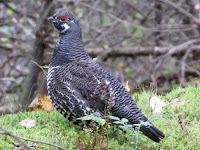

male spruce grouse in vermont usa
Spruce Grouse | credit: USFWS
Vermont is home to a variety of wildlife. Many species can be observed along the state's designated byways as they wind through mountains, valleys, forests, farmland, and other habitats.

Vermont's extensive forests are home to an array of birds. Woodland birdwatchers encounter ruffed grouse, American woodcock, gray jay, woodpeckers, chickadees, thrushes, flycatchers, numerous warblers, hawks, wood ducks, cedar waxwings, pine siskin, and other forest-dwelling birds.

Northern Vermont is one of the few places in the USA where birdwatchers may encounter spruce grouse. Northern Vermont is also a good area to encounter mammals such as snowshoe hare, beaver, American marten, red fox, gray fox, eastern bobcat,and others.

In Vermont's Northeast Kingdom, bogs and wetlands are prime areas for moose watching. Moose are spotted at West Mountain, Wenlock WMA, Victory Basin WMA, Conte National Wildlife Refuge, and Victory State Forest.

In southwestern and central Vermont, the Green Mountain National Forest (GMNF) is a popular area for wildlife watching. The forest is known for its moose and black bear, as well as smaller species of wildlife.


Massachusetts


seals on the beach at Nantucket Island MA
Seals at Nantucket beach | credit: USFWS
Massachusetts is famous for its coastal habitats where enthusiasts may encounter marine mammals.

Cape Cod, one of the state's most popular areas, is known for its seals.

Off the coast, Nantucket and Martha's Vineyard provide unique habitats for marine mammals, sea birds, and other wildlife.

In western Massachusetts, the Berkshire Mountains region is popular for wildlife watching and other outdoor recreation.


Rhode Island


Rhode Island has a wealth of natural resources including 400 miles of coastline, state parks, trails, and other areas where wildlife can be enjoyed.

Birdwatchers will find year round opportunities in Rhode Island. During the spring and fall migrations, the state is visited by a wide range of birds. In summer, resident birds are jointed by breeding populations of ospreys, shorebirds, and others. In winter, Rhode Island is visited by ducks, geese, bald eagles, hawks, falcons, and others.


Connecticut


Connecticut has a variety of wildlife watching areas such as the Litchfield Hills, Connecticut River Valley, Eastern Highlands, and Long Island Sound.

Hikers and wildlife watchers are sometimes surprised by a black bear encounter. According to the Connecticut Department of Energy and Environmental Protection (DEEP), black bears are becoming increasingly common in Connecticut.

In the mountains, forests and backwoods of Connecticut, nature enthusiasts may also see white-tailed deer and a variety of smaller mammals.

Along the coast, seals, porpoises, whales, waterfowl, and marine birds are sometimes spotted.

Species of Concern


The New England cottontail lives in parts of New England and New York. Over the last 50 years, New England cottontail populations have declined sharply.

Loss of habitat is cited as a major factor in the decline of New England cottontails. Development has taken much land once inhabited by cottontails and other wildlife.

Currently, New England cottontails occupy less than 1/ 5th of their historical range. These unique rabbits are found in southern Maine, southern New Hampshire, and parts of Massachusetts, Connecticut, Rhode Island, and New York east of the Hudson River.

For more information about New England cottontails, visit newenglandcottontail.org.

Related Information


Posts labeled wildlife

New Hampshire Rabbit Reports

Where is New England?

Friday, December 6, 2019

Acadia Annual National Park Pass December Special Pricing

Acadia National Park Annual Passes will be on sale for $28 during most of the month of December. Passes must be obtained in person. No phone orders will be taken.

On December 6, during Bar Harbor’s Midnight Madness event, passes will be available at the Village Green from 8 pm to midnight.

There are several locations to purchase your Acadia Annual Pass for “almost-half-price.” Local Chambers of Commerce will be selling the “almost-half-price” passes at Bar Harbor, Ellsworth, and Southwest Harbor/Tremont (sold at Harbor House, Southwest Harbor).

Local Town Offices will also be selling the half-price passes at Gouldsboro, Mount Desert, Tremont, and Winter Harbor. The Schoodic Institute, located at the Schoodic Education and Research Center will have passes for sale at the Rockefeller Hall Welcome Center.

Shoppers are advised to check individual hours of operation on websites or by calling ahead to ensure these independent businesses are open when planning a visit. Methods of payment may vary by business, some may only take cash while others may accept check or credit card.

Also, note the Acadia National Park Headquarters contact station on Eagle Lake Road (Route 233) closed permanently on May 1, 2017 and will not be open for information, pass sales, or restrooms.

Through the authority of the Federal Lands Recreation Enhancement Act, the National Park Service retains 80 percent of the fees collected from annual pass sales to invest in critical improvements that directly benefit visitors at Acadia National Park, including maintaining and enhancing visitor facilities.

Entrance pass revenues are essential for funding the operation of the Island Explorer bus system, which serves Acadia and its surrounding communities.

The National Park Service uses the remaining 20 percent to benefit other sites in the National Park System.

source: National Park Service

Monday, December 2, 2019

New Hampshire Duck Banding 2019

black ducks
Black Ducks
Hunters, birdwatchers, and naturalists in southern New England and along the Atlantic Flyway should be on the lookout for banded ducks this winter.

New Hampshire Fish and Game (NHFG) wildlife biologists recently attached hundreds of metal bands to ducks throughout the state.

The annual pre-hunting season banding effort is conducted in US states and Canadian provinces throughout the Atlantic Flyway in August and September.

Data from duck band sightings and recovery are used in survival-rate predictions. Along with breeding-plot data, parts collection data, and HIP (National Migratory Bird Harvest Information Program) survey data, band information is included in the model used to determine annual season regulations in the spring.

Each metal band has a unique sequence of numbers, and biologists record the species, age, and sex of each duck before it is released.

At the end of the season, all the data are submitted to the Bird Banding Lab at the Patuxent Wildlife Research Center in Laurel, Maryland.

When a hunter harvests a duck with a metal band, or a wildlife viewer reads the band through a spotting scope, they are asked to report the information to a website provided on the band (www.reportband.gov).

Bands may also be reported via traditional mail to: Bird Banding Lab, 12100 Beach Forest Road, Laurel, MD 20708.

A phone number may be inscribed on the band also, but the call center supporting the toll-free phone number has been discontinued.

This year, a total of 758 ducks were banded in New Hampshire during the pre-hunting season effort – the fifth highest total banded in the 31 years of the program. They included: 566 mallards, 175 wood ducks, 11 black ducks, and 6 mallard/black duck hybrids.

As a result of 31 consecutive years of pre-season duck banding, 12,694 ducks have now been banded in New Hampshire.

Waterfowl management is funded by Wildlife Restoration Grants administered by the US Fish and Wildlife Services, Wildlife and Sport Fish Restoration Program: Partnering to fund conservation and connect people with nature.

For more information, visit www.wildnh.com

source: New Hampshire Fish and Game

Sunday, December 1, 2019

Christmas In New England

Bass Harbor Head Lighthouse Maine | credit : NPS
Since the colonial period, Christmas has been a special time in New England. This article takes a brief look at Christmas traditions, events, things to do, and trip ideas for Christmas in New England.

Traditions


The region's natural beauty and wealth of resources have played a major role in shaping America's Christmas traditions.

Christmas traditions associated with New England include sleigh rides, ski retreats, Christmas tree farm tours, cranberry sauce, pies, seafood, and others.

Food and Drink


Food is a big part of Christmas in New England. There are usually plenty of main courses such as turkey, ham or even Maine lobster, accompanied by potatoes, winter squash, cranberry sauce, and other traditional foods. For dessert, pies are often served, especially apple, blueberry, and pumpkin. At breakfast, Vermont maple syrup is an essential topping for pancakes or waffles.

Outdoor Activities


During the Christmas season, there is no shortage of outdoor things to do in New England. Enthusiasts can enjoy skiing (downhill and cross-country), snowboarding, sledding, snowmobiling, sleigh rides, hiking, snowshoeing, ice fishing, and other cold weather activities. Holiday train excursions are another option for seeing the outdoors.

Along the coast, winter boat excursions offer unique views of waterfronts, historic landmarks, wildlife, and other sites. For birdwatchers, there are numerous Christmas Bird Counts held throughout New England.

Destinations


New England's diversity is part of its attraction. There are so many unique areas that are unlike anything else nearby.

Maine, the largest New England state, offers an array of experiences. There are isolated wild lands, quaint coastal towns, and many other settings.

Nearby, Massachusetts is another state with a range of settings for Christmas. Visitors can enjoy an urban holiday in Boston, celebrate in a coastal town, or explore the western part of the state.

In Vermont and New Hampshire, visitors can enjoy incredible scenery and a quiet atmosphere. Vermont has winter attractions such as the Green Mountains, ski areas, hiking trails, Lake Champlain ice fishing, top notch spas, and more.

In New Hampshire, nature lovers and outdoor adventurers can explore the White Mountains or ski one of the most extensive networks of cross-country ski trails in the East. Located near Mount Liberty in Franconia Notch State Park, the Flume Gorge is one of the state's most popular natural attractions. In Portsmouth, the Festival of Trees includes a spectacular display of lights.

Rhode Island, the smallest New England state, has plenty of things to do during the Christmas season. Christmas In Newport, a month long celebration, includes traditional lighting, mansion tours, and much more. While in Newport, visitors can take a boat tour to see seals, lighthouses, and waterfront views. Rhode Island also has lots of beaches where families can enjoy a winter walk.

In Connecticut, there are plenty of cities and coastal communities to visit. Favorite destinations include Mystic, New Haven, Bridgeport, Hartford, Greenwich, or other towns. Annual winter events include Winterfest Hartford, Holiday Light Fantasia (with more than 1 million lights), and the Gingerbread Festival in South Windsor.

Related Information


Where is New England?

New England Facts

Local Foods