Affiliate notice

Affiliate links may be included in posts for which compensation may be received.
Showing posts with label nature. Show all posts

Saturday, October 2, 2021

Leaf Peeping Tips

fall foliage - maple leaves
Autumn is prime time for leaf peeping in New England. This article offers a variety of tips for planning a trip to view fall foliage and other natural beauty in New England.

To experience beautiful views of fall foliage in the New England region, travelers should plan ahead whenever possible. Leaf peeping can be done on day trips, overnight excursions, or multi-day vacations.

New England states provide travelers with extensive resources for trip planning. Most states provide fall foliage forecasts, weekly updates, and route information.

Other sources of leaf peeping information can be include local contacts such as county tourism officials, innkeepers, restaurant staff, and members of the travel industry.

Although many travelers prefer to enjoy fall foliage from their own vehicle, an array of options exist. Leaf peeping can be enjoyed by train, bus, or other modes of transportation. More intimate views can sometimes be found by hiking. 

Choosing items to take on a trip will depend on the length, transportation mode, and other factors. For most travelers, water is an essential item. Other useful accessories might include snacks, eyewear, proper clothing, and a digital camera.

For independent travelers, navigation is an important subject to consider. Although smartphones and other electronic devices are convenient, it's usually good to have paper maps and possibly a compass.

Weather can be another factor to consider. Fall is usually a time when there are plenty of bright clear days which are suitable for leaf peeping and nature appreciation. Between periods of fair weather, storms or other natural events can limit travel opportunities.

The fall season in New England can be a great time to enjoy the outdoors. Travelers can make the most of their time by doing pre-trip research, being ready on short notice, and taking opportunities when they arise. 


Friday, August 28, 2020

Connecticut Black Bear Encounters 2020

black bear
Black Bear | credit: USFWS
In Connecticut, interactions between black bears and people are continuing to rise, resulting in unprecedented numbers of complaints and requests for assistance, according to the Connecticut Department of Energy and Environmental Protection (DEEP).

Some of these interactions have been serious, including bears entering homes and gravely injuring both leashed and unleashed dogs.

As of July 8th, 2020 DEEP had received more reports of bears entering homes (25) than in any previous year.

Connecticut could triple the average number of black bear home entries experienced 2018 and 2019, according to DEEP. The number of home entries reported this year in June alone (17) equaled those reported during all of 2019.

DEEP is reminding residents of several best practices they can incorporate to help reduce the likelihood of an encounter with a bear. These practices, along with additional information, are available on DEEP’s “Living with Black Bears” website: https://portal.ct.gov/DEEP/Wildlife/Nuisance-Wildlife/Living-with-Black-Bears

Black bears that access and consume human-associated food (e.g. birdseed, trash, pet food) on a regular basis become habituated (comfortable around people) and food-conditioned (associate humans with food).

As the bear population continues to grow and expand its range, and bears become increasingly food conditioned, conflicts with humans will continue to increase, and food-conditioned bears pose a greater risk to public safety and often cause more property damage to houses, cars, pets, and livestock.

In the rare instance when a bear appears to be aggressive toward people, residents should immediately contact DEEP’s 24-hour dispatch line at 860-424-3333.

Bear sightings reported by the public provide valuable information to assist the DEEP in monitoring changes in the black bear population.

Anyone who observes a black bear in Connecticut is encouraged to report the sighting on DEEP’s website at https://portal.ct.gov/DEEP/Wildlife/Nuisance-Wildlife/Living-with-Black-Bears or call the Wildlife Division at 860-424-3011.

Information on the presence or absence of ear tags, including tag color and numbers, is particularly valuable. A common misconception is that a tagged bear is a problem bear, and a bear with two ear tags was caught on two different occasions because it was causing problems.

Actually, every bear receives two ear tags (one in each ear) the first time it is handled by DEEP. Most tagged bears have not been caught as problem bears, but rather as part of a project researching the state’s population.

DEEP suggests that municipalities adopt ordinances prohibiting the feeding of black bears, as a way of reducing conflicts between humans and bears. The towns of Hartland, Colebrook, and Barkhamsted have already adopted such ordinances

source: Connecticut Department of Energy and Environmental Protection

Sunday, August 16, 2020

Rachel Carson National Wildlife Refuge 50th Anniversary


bald eagle in flight
In 2020, Rachel Carson National Wildlife Refuge (NWR) is celebrating the 50th anniversary of its renaming in honor of the world-renowned marine biologist, author, environmentalist and former U.S. Fish and Wildlife Service employee, Rachel Carson.

The refuge's year-long celebration marks the formal dedication of the renaming, which took place on June 27, 1970. The 50th anniversary celebration will include an array of virtual and remote events.

During the 50th anniversary celebration, the refuge will be highlighting dozens of opportunities to explore its wealth of wildlife, habitat and natural resources, as well as Rachel Carson’s legacy.

Rachel Carson National Wildlife Refuge, established in 1966 as the Coastal Maine National Wildlife Refuge, is comprised of 11 divisions, which span 50 miles of coastline in York and Cumberland counties, from Kittery to Cape Elizabeth.

Currently at 5,690 acres, the refuge will contain approximately 14,683 acres of various wildlife habitats when land acquisition is complete.

In addition to sheltering wildlife and protecting natural resources, Rachel Carson NWR offers a variety of experiences on public lands.

The refuge contains three main nature trails and many wildlife observation stations featuring every habitat type found on the refuge, hunting and fishing opportunities, interpretive and educational programs, a visitor information center, volunteering opportunities, and other recreational activities.

Anglers can access a variety of tidal fishing spots on the refuge. The fishing season is open year round for saltwater fishing to the head of tide.

Chauncey Creek, Brave Boat Tidal Creek, Ogunquit River, Stevens Brook, Webhannet River, Merriland River/Skinner Mill, Mousam River, Goosefare Brook, and Spurwink River were incorporated into the previous Refuge Fish Plan in 2000.

The 2020 Recreational Fishing Plan expands fishing opportunities available to the public by opening the Little River at Timber Point.

Rachel Carson was a world-renowned marine biologist, author and environmentalist who served as an aquatic biologist and editor-in-chief for the U.S. Fish & Wildlife Service. She has been credited with launching the contemporary environmental movement and awakening the concern of Americans for the environment.

In her writings, Rachel Carson displayed a unique ability to simultaneously engage her own sense of wonder as well as that of her readers through eloquent prose and investigation of natural phenomena and biological processes. Her work helped connect people to nature and inspire environmental stewardship.

Carson regularly summered on Southport Island, where she studied its beach and tide pools to research The Edge of the Sea (1955). Through tireless investigation for her greatest work, Silent Spring (1962), she linked the unrestrained use of post-World War II chemical pesticides with fearsome, biological consequences.

Overcoming industry and government pressure to abandon her research, Carson alerted generations to use chemicals with utmost caution, warning that their improper use would have devastating effects on public health and the environment.

As fitting recognition of Carson’s contributions to conservation after her death in 1964, the refuge was renamed in her honor.

source: USFWS

Tuesday, December 31, 2019

New Hampshire Rabbit Reports

Eastern Cottontail
NH Rabbit Reports (nhrabbitreports.org) is asking for citizen scientists to collect data, take photos, and report sightings of rabbits throughout New Hampshire this winter.

Anyone can participate, and rabbit sightings will help the NH Rabbit Reports team learn more about where rabbit species are located in the state.

Participants can use a smartphone or computer to submit a sighting information and photograph to NH Rabbit Reports, and no species identification skills are required.

New Hampshire is home to two species of rabbits, the Eastern cottontail and the New England cottontail, as well as one species of hare, the snowshoe hare.

NH Rabbit Reports sighting information helps researchers understand the distribution and potential abundance of these species. By understanding the relationship between the distributions of the two rabbit species, organizations and state agencies can make informed decisions about habitat management.

This is vital for rabbit species, particularly for the New England cottontail, which is classified as a state-endangered species in New Hampshire.

The New England cottontail is native to New Hampshire, but has seen dwindling population numbers over the last several decades throughout its range, mostly due to habitat loss and fragmentation. The species requires large areas of early-successional habitat to avoid predators, and they typically don’t venture far from thick shrubs and young trees.

Meanwhile, eastern cottontails are able to venture farther from protective cover and are better equipped to survive in the human-dominated habitats of New England.

N.H. Fish and Game coordinates a comprehensive effort to survey for the presence of New England cottontail rabbits in and around the areas where they are known to be present. However, less is known about where and in what numbers eastern cottontails are found in the state.

“We have received hundreds of sightings from people in New Hampshire reporting the rabbits they see,” said Heidi Holman, a wildlife biologist who coordinates N.H. Fish and Game’s New England cottontail restoration efforts. “The Rabbit Reports website gives us the opportunity to build a map and database of all this information to collect distribution information about eastern cottontail rabbits in one place.”

NH Rabbit Reports is sponsored by UNH Cooperative Extension and the New Hampshire Fish and Game Department, with support from the Wildlife Heritage Foundation of New Hampshire.

For more information, visit the project website at nhrabbitreports.org

source: New Hampshire Fish and Game Department

Related Information


Wildlife in New England

Sunday, December 15, 2019

Wildlife in New England

Moose | credit: USFWS
Some of North America's most iconic wildlife can be found in the New England Region.

Its mountains and forests are inhabited by black bear, moose, deer, beaver, marten, weasels, rabbits, hares, foxes, bobcat, lynx, eagles, hawks, owls, turkey, grouse, songbirds, and others.

Along the coast and out at sea, there are whales, porpoises, seals, sea turtles, waterfowl, sea birds, and other marine life.

Maine


With an abundance of sparsely populated woodlands and miles of rugged coasts, Maine is one of the best states for wildlife watching.

The moose is the largest of Maine's land animals and one of its most popular wildlife attractions. Other mammals seen in backwoods Maine include white-tailed deer, black bear, red fox, bobcats, beaver, and others. Maine is one of the few U.S. states where Canada lynx and American marten can be seen in the wild.

Winding through wilderness areas, the Appalachian National Scenic Trail offers miles of areas for wildlife watching. In the Highlands Region, Moosehead Lake is a popular destination for wildlife watching and other recreational activities.

New Hampshire


New Hampshire is known for its rugged mountains and extensive woodlands, where human populations are not a major stress on wildlife. While exploring the state's wild areas, visitors may encounter moose, white-tailed deer, black bear, red fox, bobcats, and others.

Vermont
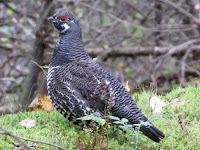

male spruce grouse in vermont usa
Spruce Grouse | credit: USFWS
Vermont is home to a variety of wildlife. Many species can be observed along the state's designated byways as they wind through mountains, valleys, forests, farmland, and other habitats.

Vermont's extensive forests are home to an array of birds. Woodland birdwatchers encounter ruffed grouse, American woodcock, gray jay, woodpeckers, chickadees, thrushes, flycatchers, numerous warblers, hawks, wood ducks, cedar waxwings, pine siskin, and other forest-dwelling birds.

Northern Vermont is one of the few places in the USA where birdwatchers may encounter spruce grouse. Northern Vermont is also a good area to encounter mammals such as snowshoe hare, beaver, American marten, red fox, gray fox, eastern bobcat,and others.

In Vermont's Northeast Kingdom, bogs and wetlands are prime areas for moose watching. Moose are spotted at West Mountain, Wenlock WMA, Victory Basin WMA, Conte National Wildlife Refuge, and Victory State Forest.

In southwestern and central Vermont, the Green Mountain National Forest (GMNF) is a popular area for wildlife watching. The forest is known for its moose and black bear, as well as smaller species of wildlife.


Massachusetts


seals on the beach at Nantucket Island MA
Seals at Nantucket beach | credit: USFWS
Massachusetts is famous for its coastal habitats where enthusiasts may encounter marine mammals.

Cape Cod, one of the state's most popular areas, is known for its seals.

Off the coast, Nantucket and Martha's Vineyard provide unique habitats for marine mammals, sea birds, and other wildlife.

In western Massachusetts, the Berkshire Mountains region is popular for wildlife watching and other outdoor recreation.


Rhode Island


Rhode Island has a wealth of natural resources including 400 miles of coastline, state parks, trails, and other areas where wildlife can be enjoyed.

Birdwatchers will find year round opportunities in Rhode Island. During the spring and fall migrations, the state is visited by a wide range of birds. In summer, resident birds are jointed by breeding populations of ospreys, shorebirds, and others. In winter, Rhode Island is visited by ducks, geese, bald eagles, hawks, falcons, and others.


Connecticut


Connecticut has a variety of wildlife watching areas such as the Litchfield Hills, Connecticut River Valley, Eastern Highlands, and Long Island Sound.

Hikers and wildlife watchers are sometimes surprised by a black bear encounter. According to the Connecticut Department of Energy and Environmental Protection (DEEP), black bears are becoming increasingly common in Connecticut.

In the mountains, forests and backwoods of Connecticut, nature enthusiasts may also see white-tailed deer and a variety of smaller mammals.

Along the coast, seals, porpoises, whales, waterfowl, and marine birds are sometimes spotted.

Species of Concern


The New England cottontail lives in parts of New England and New York. Over the last 50 years, New England cottontail populations have declined sharply.

Loss of habitat is cited as a major factor in the decline of New England cottontails. Development has taken much land once inhabited by cottontails and other wildlife.

Currently, New England cottontails occupy less than 1/ 5th of their historical range. These unique rabbits are found in southern Maine, southern New Hampshire, and parts of Massachusetts, Connecticut, Rhode Island, and New York east of the Hudson River.

For more information about New England cottontails, visit newenglandcottontail.org.

Related Information


Posts labeled wildlife

New Hampshire Rabbit Reports

Where is New England?

Friday, December 6, 2019

Acadia Annual National Park Pass December Special Pricing

Acadia National Park Annual Passes will be on sale for $28 during most of the month of December. Passes must be obtained in person. No phone orders will be taken.

On December 6, during Bar Harbor’s Midnight Madness event, passes will be available at the Village Green from 8 pm to midnight.

There are several locations to purchase your Acadia Annual Pass for “almost-half-price.” Local Chambers of Commerce will be selling the “almost-half-price” passes at Bar Harbor, Ellsworth, and Southwest Harbor/Tremont (sold at Harbor House, Southwest Harbor).

Local Town Offices will also be selling the half-price passes at Gouldsboro, Mount Desert, Tremont, and Winter Harbor. The Schoodic Institute, located at the Schoodic Education and Research Center will have passes for sale at the Rockefeller Hall Welcome Center.

Shoppers are advised to check individual hours of operation on websites or by calling ahead to ensure these independent businesses are open when planning a visit. Methods of payment may vary by business, some may only take cash while others may accept check or credit card.

Also, note the Acadia National Park Headquarters contact station on Eagle Lake Road (Route 233) closed permanently on May 1, 2017 and will not be open for information, pass sales, or restrooms.

Through the authority of the Federal Lands Recreation Enhancement Act, the National Park Service retains 80 percent of the fees collected from annual pass sales to invest in critical improvements that directly benefit visitors at Acadia National Park, including maintaining and enhancing visitor facilities.

Entrance pass revenues are essential for funding the operation of the Island Explorer bus system, which serves Acadia and its surrounding communities.

The National Park Service uses the remaining 20 percent to benefit other sites in the National Park System.

source: National Park Service

Monday, December 2, 2019

Untold Secret Maine Public Lands Video

The Maine Bureau of Parks and Lands (BPL) recently announced the launch of Untold Secret, a short film showcasing Public Lands of Maine, USA.

Created to introduce viewers to over 600,000 acres of Maine Public Lands,Untold Secret is available as a full-length (21-minute) version, or a series of three-minute segments.

The film features commentary from BPL leaders and state of the art cinematography, including breathtaking drone footage. The result is an incredibly detailed and birds-eye view of some of the most spectacular Maine Public Lands.

"Experiencing and preserving the outdoors is an integral part of our heritage, it is who we are as a people, and it is a cornerstone of our state's economy. Untold Secret builds on that legacy and encourages more people, visitors and Mainers alike, to explore our states public lands and to witness firsthand the unrivaled beauty of Maine." said Governor Janet Mills.

Aspects of the Maine Public Lands shared through Untold Secret range from wildlife habitat and timber management, to outdoor recreation, ecological sensitivity, and unfettered public access.

Untold Secret was paid for by a Maine Outdoor Heritage Fund grant and produced by 360 Media Ventures, a Portland, Maine, based content marketing company specializing in action and adventure videos. Recently retired BPL forester Vern Labbe spearheaded the project, with assistance from BPL staffers Doug Reed and Rex Turner.

Untold Secret can be viewed by visiting www.parksandlands.com. The full-length film and segments are available for free use by conservationists, producers, school systems, economic development offices, libraries, and anyone else wishing to share and educate others about this natural and cultural resource.

BPL provides environmental and economic benefits for the people of Maine by protecting and managing its most valued natural and cultural resources and creating opportunities for high-quality outdoor recreation.

With over 1.5 million acres in its care, including 48 state parks and historic sites, the Maine Public Lands, and conservation easements, BPL protects thousands of miles of hiking and multi-use trails, ocean and lake beaches, swimming, camping areas, picnic sites, shelters, and other resources.

New Hampshire Duck Banding 2019

black ducks
Black Ducks
Hunters, birdwatchers, and naturalists in southern New England and along the Atlantic Flyway should be on the lookout for banded ducks this winter.

New Hampshire Fish and Game (NHFG) wildlife biologists recently attached hundreds of metal bands to ducks throughout the state.

The annual pre-hunting season banding effort is conducted in US states and Canadian provinces throughout the Atlantic Flyway in August and September.

Data from duck band sightings and recovery are used in survival-rate predictions. Along with breeding-plot data, parts collection data, and HIP (National Migratory Bird Harvest Information Program) survey data, band information is included in the model used to determine annual season regulations in the spring.

Each metal band has a unique sequence of numbers, and biologists record the species, age, and sex of each duck before it is released.

At the end of the season, all the data are submitted to the Bird Banding Lab at the Patuxent Wildlife Research Center in Laurel, Maryland.

When a hunter harvests a duck with a metal band, or a wildlife viewer reads the band through a spotting scope, they are asked to report the information to a website provided on the band (www.reportband.gov).

Bands may also be reported via traditional mail to: Bird Banding Lab, 12100 Beach Forest Road, Laurel, MD 20708.

A phone number may be inscribed on the band also, but the call center supporting the toll-free phone number has been discontinued.

This year, a total of 758 ducks were banded in New Hampshire during the pre-hunting season effort – the fifth highest total banded in the 31 years of the program. They included: 566 mallards, 175 wood ducks, 11 black ducks, and 6 mallard/black duck hybrids.

As a result of 31 consecutive years of pre-season duck banding, 12,694 ducks have now been banded in New Hampshire.

Waterfowl management is funded by Wildlife Restoration Grants administered by the US Fish and Wildlife Services, Wildlife and Sport Fish Restoration Program: Partnering to fund conservation and connect people with nature.

For more information, visit www.wildnh.com

source: New Hampshire Fish and Game

Sunday, December 1, 2019

Wetland, Woodland, Wildland Guide to Vermont

Vermont contains a great diversity of wetlands, ranging from open water habitats to rich forested swamps.

Because of differences in hydrology, parent soil material, historical land use, topography and other factors, each wetland can be unique in appearance, biota, and function in the landscape.

Some general wetland types present in Vermont include open water wetlands, emergent wetlands, scrub-shrub wetlands, forested wetlands, wet meadows, fens, bogs, and vernal pools.

A great place to learn more about the different types of wetlands in Vermont is in Wetland, Woodland, Wildland: A Guide to the Natural Communities of Vermont.

A completely updated second edition, co-authored by Elizabeth Thompson of the Vermont Land Trust, and Eric Sorenson and Robert Zaino of the Vermont Fish and Wildlife Department, incorporates recent scientific research about the state’s natural communities and includes descriptions of seventeen newly recognized natural community types.

With updated photographs, line drawings, and user-friendly writing, the guide is suitable for amateur naturalists as well as professional scientists.

The book is published by the Vermont Fish and Wildlife Department, The Nature Conservancy, and the Vermont Land Trust, and it is distributed by Chelsea Green Publishing.

Wetland, Woodland, Wildland: A Guide to the Natural Communities of Vermont can be purchased in local bookstores or online (https://vtfishandwildlife.com/wetland-woodland-wildland).

source: Vermont Fish and Wildlife Department

Saturday, November 30, 2019

Amphibians of Rhode Island Book

The Rhode Island Department of Environmental Management (DEM) recently announced the publication of Amphibians of Rhode Island, an authoritative book of amphibians that are native to Rhode Island.

Written by longtime DEM natural heritage biologist Christopher Raithel, the book provides meticulous accounts of the state's native frogs, toads, and salamanders and their respective habitats, and includes crisp, vivid photography depicting the amphibians' multiple life stages.

Amphibians of Rhode Island combines an exhaustive search of the historical record and four decades of Raithel's intense personal study to present complete information on the statewide distribution, demography, seasonal movement, reproduction and development, research needs, and conservation status of each species.

One chapter is devoted entirely to conservation, detailing the threats faced by amphibians and the actions needed to safeguard them.

Raithel enjoyed a distinguished, 40-year career in DEM's Division of Fish and Wildlife, where he served as the state endangered species biologist, herpetologist, and non-game bird biologist.

Amphibians of Rhode Island is a resource for scientists, students, and nature lovers. Published by DEM's Division of Fish and Wildlife, the book is priced at $20 including tax.

Amphibians of Rhode Island may be purchased in person at the DEM Office of Boat Registration and Licensing in Providence by cash, check, money order, or credit card (credit card requires an extra fee) and at the Division of Fish and Wildlife Field Headquarters in West Kingston, by check or money order only.

The book can also be ordered online from: http://www.dem.ri.gov/bookorder.

The U.S. Fish and Wildlife Service (USFWS) and State Wildlife Grants Program provided funding for the book. All revenue generated by its sale will be directed toward wildlife conservation via the Rhode Island Division of Fish and Wildlife.

Rhode Island is home to 18 species of amphibians. The eastern spadefoot toad and northern leopard frog are species of concern in the state.

source: Department of Environmental Management